

Clinical decision support tools are becoming more important in daily medical practice. In 2026, the best tools are not the ones that try to replace clinical judgment. They are the ones that help clinicians make faster, safer, and better-informed decisions.
For medical practitioners, the strongest setup is usually a mix of specialized tools. Some help with medication safety. Others support imaging decisions, lab monitoring, risk scoring, care gaps, or evidence review.
This guide explains the main types of clinical decision support tools worth considering in 2026 and where ZoeMD fits in the clinical workflow.
What Is a Clinical Decision Support Tool?
A clinical decision support tool helps healthcare professionals access relevant clinical information when making decisions. This may include evidence summaries, medication alerts, risk scores, guideline prompts, diagnostic checklists, lab result alerts, or patient-specific reminders.
A good tool should support clinical reasoning, not replace it. It should make important information easier to find, easier to verify, and easier to apply in real-world care.

1. Evidence-Based Clinical Answer Tools
Evidence-based clinical answer tools help clinicians ask medical questions and receive clear answers supported by medical sources. These tools are useful when a practitioner needs to quickly review current evidence, compare treatment options, or verify clinical information.
Example: ZoeMD
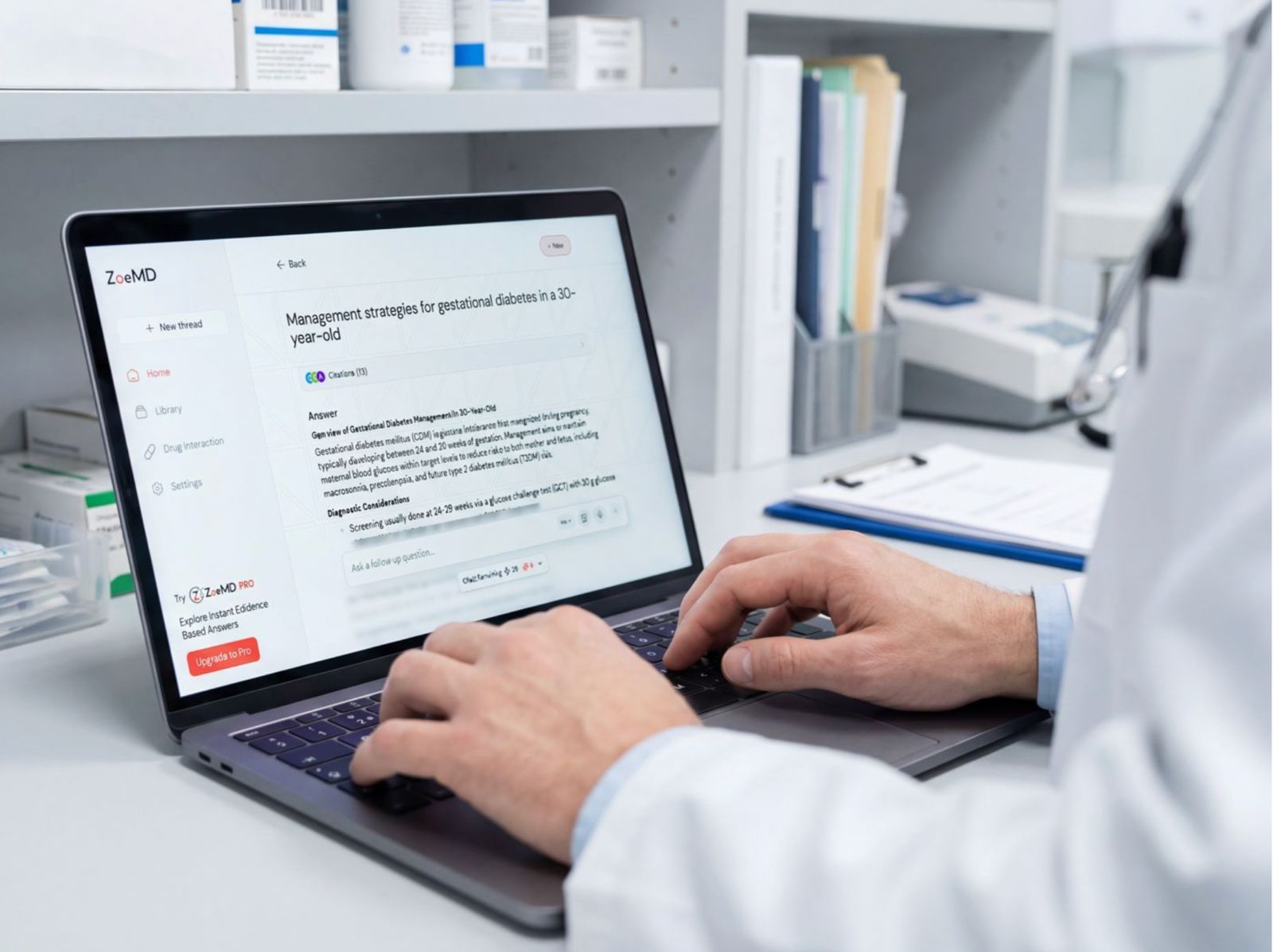
ZoeMD is an evidence-based clinical decision support tool built for healthcare professionals. Clinicians can ask questions in natural language and receive structured medical answers with citations and links to supporting evidence.
ZoeMD is useful when practitioners need to review evidence quickly without manually searching through multiple journals, guidelines, or medical databases. It can support clinical learning, case review, medical research, and evidence-based decision-making.
Best for: clinicians who need fast, cited medical answers and source transparency.
2. Antimicrobial Stewardship Tools
Antimicrobial stewardship tools support antibiotic selection, dose review, treatment duration, allergy considerations, and de-escalation decisions. These tools are especially useful when antibiotic choices depend on infection site, severity, renal function, culture results, and local resistance patterns.

They are often used in hospitals, urgent care, primary care, infectious disease, and pharmacy workflows.
Best for: clinicians who prescribe or review antibiotics and need medication-specific prescribing support.
3. Imaging Decision Support Tools
Imaging decision support tools help clinicians decide when imaging may be appropriate and which modality to consider. They can support decisions around X-ray, ultrasound, CT, MRI, and follow-up imaging.
These tools can help reduce unnecessary imaging, improve referral quality, and make imaging orders more consistent with clinical criteria.
Best for: clinicians ordering diagnostic imaging in primary care, emergency medicine, orthopedics, internal medicine, and specialty settings.

4. Clinical Risk Calculator Tools
Risk calculator tools help clinicians apply validated scoring systems quickly and consistently. They are useful when clinical decisions depend on structured risk estimation or severity classification.
Common examples include cardiovascular risk, stroke risk, bleeding risk, pulmonary embolism probability, kidney function, sepsis risk, fracture risk, and perioperative risk.
These tools do not replace clinical interpretation, but they help standardize how risk is calculated and communicated.
Best for: clinicians who need quick, structured scoring support during assessment, triage, prescribing, or treatment planning.
5. Lab Monitoring and Abnormal Result Alert Tools
Lab monitoring tools help clinicians identify abnormal results, missed follow-ups, and important changes over time. They are especially useful in busy practices where test results can accumulate quickly.
These tools may flag worsening kidney function, abnormal liver enzymes, critical values, medication monitoring gaps, chronic disease markers, or trends that require follow-up.

Best for: practices managing chronic disease, medication monitoring, high result volumes, or complex patient panels.
6. EHR-Based Care Gap Tools
Care gap tools work inside or alongside the electronic health record to identify missing preventive care, overdue screenings, vaccinations, chronic disease follow-ups, or quality measure gaps.
These tools help clinicians and care teams manage patient needs beyond the single visit. They are especially useful for primary care, population health, and chronic disease management.
Best for: clinics and healthcare organizations that need patient-specific reminders and preventive care tracking.
How These Tools Work Together
The best clinical decision support strategy is not one tool trying to do everything. A practical setup uses different tools for different clinical tasks.
For example, a clinician may use:
- An antimicrobial stewardship tool for antibiotic decisions
- An imaging support tool for scan appropriateness
- A risk calculator for validated scoring
- A lab alert tool for abnormal results and follow-up needs
- An EHR care gap tool for preventive care reminders
- ZoeMD for evidence-based answers with citations
This approach keeps each tool focused and reduces the risk of relying on one system for every decision.
Where ZoeMD Fits
ZoeMD fits best when clinicians need fast access to evidence-backed medical answers. It is especially useful for practitioners who want to understand the evidence behind a clinical question and review the supporting sources directly.
A clinician may use ZoeMD to:

- Review current evidence on a treatment option
- Compare clinical approaches
- Find citations for further reading
- Support case preparation or clinical learning
- Verify medical information before applying it in practice
ZoeMD does not replace specialized tools for antibiotics, imaging, lab monitoring, or EHR alerts. Instead, it complements them by helping clinicians access and verify evidence more efficiently.
Final Thoughts
The best clinical decision support tools in 2026 are focused, transparent, and easy to use in real clinical workflows. Medical practitioners benefit most when each tool solves a specific problem.
ZoeMD is a strong example of an evidence-based clinical decision support tool because it focuses on cited medical answers and source transparency. Used alongside more specialized tools, it can help clinicians save time, reduce uncertainty, and make better-informed decisions while keeping clinical judgment at the center of care.
FAQ
What is the best clinical decision support tool in 2026?
The best tool depends on the clinical task. Some tools are best for medication safety, imaging, lab monitoring, risk scoring, or care gaps. ZoeMD is useful for clinicians who need evidence-based medical answers with citations.
Is ZoeMD a clinical decision support tool?
Yes. ZoeMD is a clinical decision support tool that helps healthcare professionals ask medical questions and receive evidence-based answers with citations and source links.
Can clinical decision support tools replace clinicians?
No. Clinical decision support tools should support medical practitioners, not replace clinical judgment. Clinicians still need to interpret information based on the patient’s history, examination, context, and local standards of care.
What should clinicians look for in a clinical decision support tool?
Clinicians should look for evidence transparency, trusted sources, clinical relevance, usability, workflow fit, and clear safety boundaries.