
Modern clinicians are expected to stay fluent in an ever-expanding medical literature landscape—clinical trials, systematic reviews, guidelines, real-world evidence, and post-market data. Yet the pace of publishing has far outstripped the time available to read, appraise, and synthesize it all.
This is where the medical research assistant has emerged as a practical, clinician-centered AI capability—not as a shortcut to conclusions, but as a structured way to work with evidence more effectively.
At ZoeMD, the idea of an AI research assistant is not about replacing clinical reasoning. It’s about supporting it with grounded, retrievable, and verifiable medical knowledge, delivered through a conversational interface that fits naturally into how clinicians think and work.
Why Clinicians Need a Medical Research Assistant Today
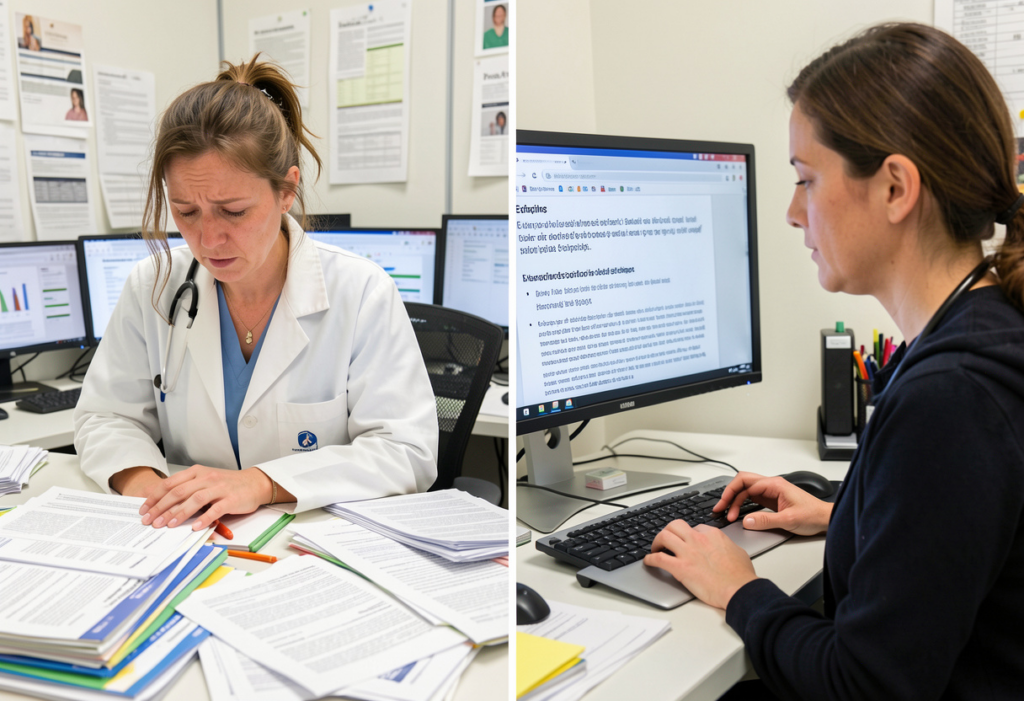
Medical knowledge is growing at a rate no individual clinician can fully track. New studies can challenge prior assumptions, guidelines evolve, and patient populations rarely match trial cohorts perfectly.
Traditional workflows—manual literature searches, guideline PDFs, or static summaries—introduce friction at exactly the moment clinicians need clarity. A modern medical research assistant helps by:
- Synthesizing evidence across multiple vetted sources
- Structuring information around clinical context
- Reducing time spent searching without oversimplifying conclusions
Unlike generic AI tools, ZoeMD’s approach builds on the same reliability principles discussed in its work on evidence retrieval AI—ensuring that answers are grounded in retrieved sources rather than generated in isolation.
From Search to Synthesis: How AI Research Support Has Evolved
Early clinical AI tools focused on search: keyword queries, document lists, and abstracts. While useful, they still required clinicians to do the heavy lifting of interpretation.
A medical research assistant goes further. Instead of acting like a search engine, it behaves like a conversational collaborator, capable of:
- Narrowing evidence based on patient-specific variables
- Highlighting consensus and disagreement in the literature
- Presenting findings in clinically meaningful language
This evolution mirrors what ZoeMD has outlined in its work on AI medical search engines—but with a crucial distinction: the assistant doesn’t just retrieve documents; it reasons across them while keeping citations transparent.
Evidence First: Why Retrieval Matters in Medical AI
One of the biggest concerns clinicians have with AI tools is hallucination—confident answers that are poorly grounded in evidence. A reliable medical research assistant must be built differently.
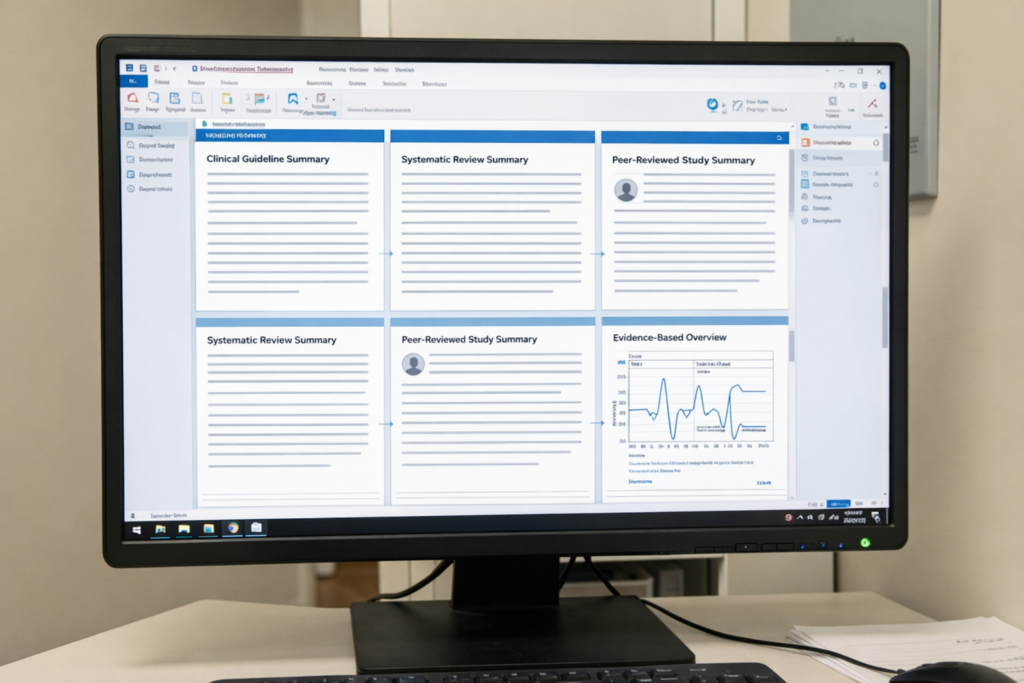
ZoeMD’s architecture emphasizes retrieval-augmented reasoning, meaning the system:
- Retrieves relevant excerpts from vetted medical sources
- Anchors responses to those sources
- Generates explanations that remain traceable and reviewable
This design philosophy aligns closely with the principles discussed in medical research AI and ensures that clinical insight remains evidence-led, not model-led.
For clinicians, this translates into answers that can be questioned, explored, and validated—just like any other clinical reference.
Supporting, Not Replacing, Clinical Judgment
A common misconception is that an AI research assistant tells clinicians what to do. In practice, the opposite should be true.
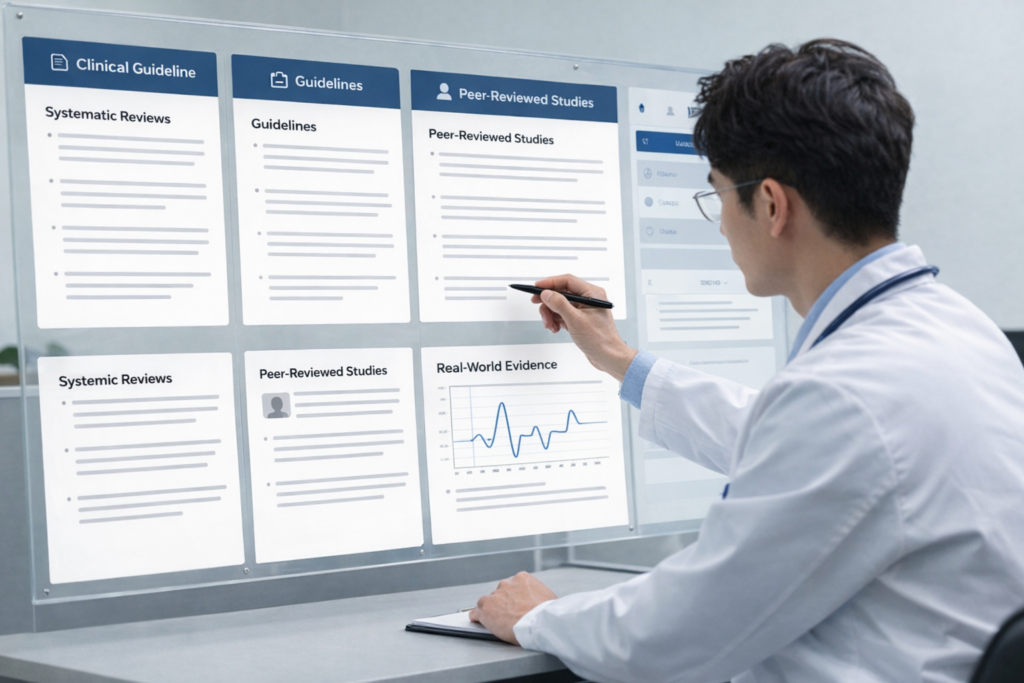
A well-designed medical research assistant:
- Surfaces relevant studies without asserting a single “correct” answer
- Highlights uncertainty, limitations, and study design differences
- Respects that final decisions rest with the clinician
This approach echoes ZoeMD’s broader philosophy seen in tools like the AI symptom checker for clinicians, where AI supports structured reasoning without bypassing professional judgment.

Reducing Cognitive Load in Daily Clinical Work
One of the most tangible benefits of an AI research assistant is cognitive relief. Clinicians spend significant mental energy switching between:
- Patient care
- Documentation
- Evidence review
- Administrative tasks
By handling the mechanics of evidence retrieval and synthesis, a medical research assistant helps clinicians focus on interpretation and application.
This matters not only for efficiency, but also for wellbeing—an issue explored in ZoeMD’s discussion of physician burnout solutions. Reducing unnecessary cognitive friction is a meaningful step toward sustainable clinical practice.

Real-World Evidence and Ongoing Learning
Clinical trials are essential—but they’re not the whole story. Increasingly, clinicians rely on:
- Real-world data
- Registry studies
- Post-market safety signals
A modern medical research assistant must be able to incorporate these evidence types while clearly distinguishing them from randomized trial data.
ZoeMD’s emphasis on evidence hierarchy and context allows clinicians to see how conclusions are derived, not just what they are—an approach consistent with its work in evidence-based medicine AI.
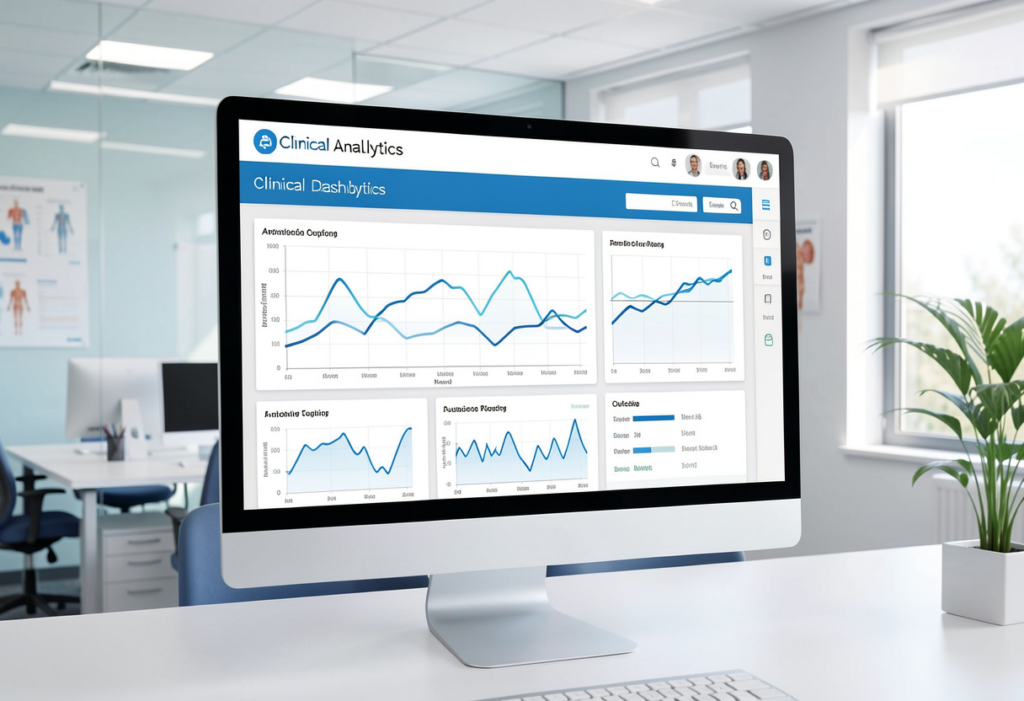
A Conversational Interface Built for Clinical Thinking
Unlike traditional research tools, ZoeMD’s medical research assistant operates through dialogue. This matters because clinicians don’t think in keywords—they think in cases.
Instead of asking, “What papers exist on X?”, clinicians can ask questions like:
- “What evidence supports this treatment in older adults with comorbidities?”
- “How do recent trials compare on safety outcomes?”
- “Where do guidelines disagree, and why?”
This conversational flow aligns with how clinical reasoning naturally unfolds, making evidence engagement less disruptive and more intuitive.

Where a Medical Research Assistant Fits in the Clinical Ecosystem
The medical research assistant isn’t a standalone product—it complements decision support, documentation, and clinical workflows.
ZoeMD positions it alongside tools like AI clinical decision support and clinical decision support systems, forming an ecosystem where evidence, reasoning, and patient context are connected rather than siloed.
Final Thoughts: Evidence, Made Usable
The value of a medical research assistant isn’t speed alone—it’s trust. Clinicians need tools that respect the complexity of medicine, acknowledge uncertainty, and remain accountable to evidence.
By grounding answers in retrieved sources, presenting information conversationally, and supporting—not replacing—clinical judgment, ZoeMD’s approach reflects a new generation of clinical AI: one that helps clinicians think better, not faster.
If you’re exploring how evidence-based AI can support your clinical or research workflow, ZoeMD’s growing knowledge base offers deeper insights into how retrieval-grounded systems are reshaping medical practice—one question at a time.
Explore more:
- Learn how conversational reasoning supports diagnosis in the AI Symptom Checker for Clinicians
- See how evidence retrieval reduces hallucinations in Evidence Retrieval AI
- Understand the broader landscape in Medical Research AI