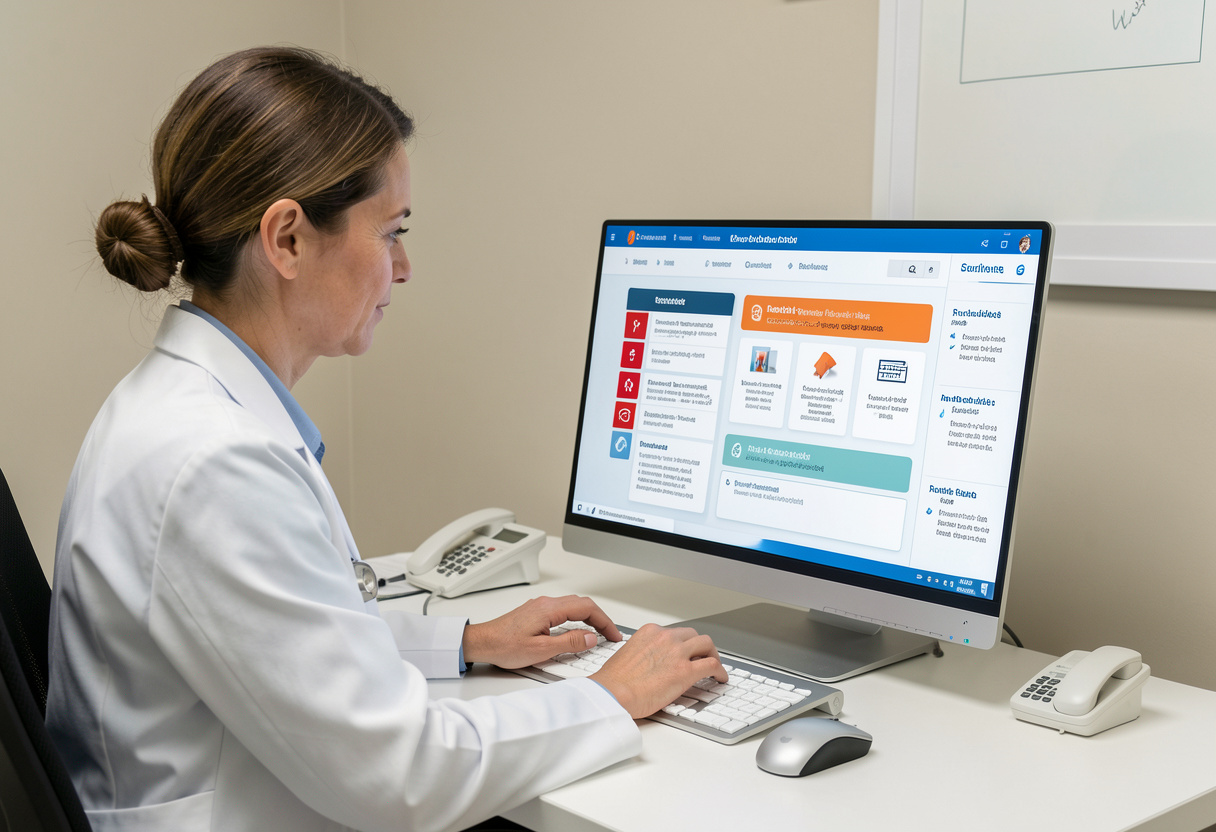
Clinicians today are asked to process more information, faster, and with greater accountability than ever before. Patients present with complex symptoms, overlapping conditions, and expectations shaped by online medical content—while appointment times continue to shrink.
In this environment, the AI symptom checker for clinicians is emerging as a powerful clinical support tool. Not as a consumer self-diagnosis app, and not as a replacement for physician judgment—but as a conversational, evidence-grounded assistant that helps translate symptom input into structured, clinically relevant reasoning.
This article explores how clinician-grade AI symptom checkers work in 2026, why evidence-based design matters, and how systems like ZoeMD support safe, efficient clinical reasoning from the very first symptom discussion.
What an AI Symptom Checker for Clinicians Really Is
An AI symptom checker for clinicians is a conversational clinical tool that allows physicians to describe patient symptoms in natural language and receive structured, evidence-backed clinical context in response.
Instead of producing a single diagnosis or probability score, a clinician-focused symptom checker supports:
- Differential diagnosis exploration
- Identification of red flags
- Guideline-aligned next steps
- Evidence summaries grounded in current research
Crucially, this interaction happens through dialogue. Clinicians ask follow-up questions, add context, refine symptom descriptions, and explore reasoning—mirroring how real clinical thinking unfolds.
This conversational model distinguishes physician-grade tools from consumer symptom checkers, which often rely on rigid questionnaires and opaque scoring systems.
Why Consumer Symptom Checkers Fall Short in Clinical Care
Most people are familiar with consumer symptom checkers. While useful for general health awareness, they are fundamentally unsuitable for clinical decision-making.
Key limitations include:
- Lack of transparent sourcing
- No distinction between high-quality and low-quality evidence
- Oversimplified logic trees
- No accommodation for comorbidities or nuance
For clinicians, these tools can increase risk rather than reduce it.
ZoeMD addresses this gap by embedding symptom analysis within an evidence-based AI framework, where clinical responses are grounded in retrieved guidelines, trials, and reviews. This approach aligns with the broader shift toward evidence-based medical AI, explored in depth in ZoeMD’s discussion of how evidence-driven systems support modern clinical practice.
From Symptom Input to Clinical Reasoning
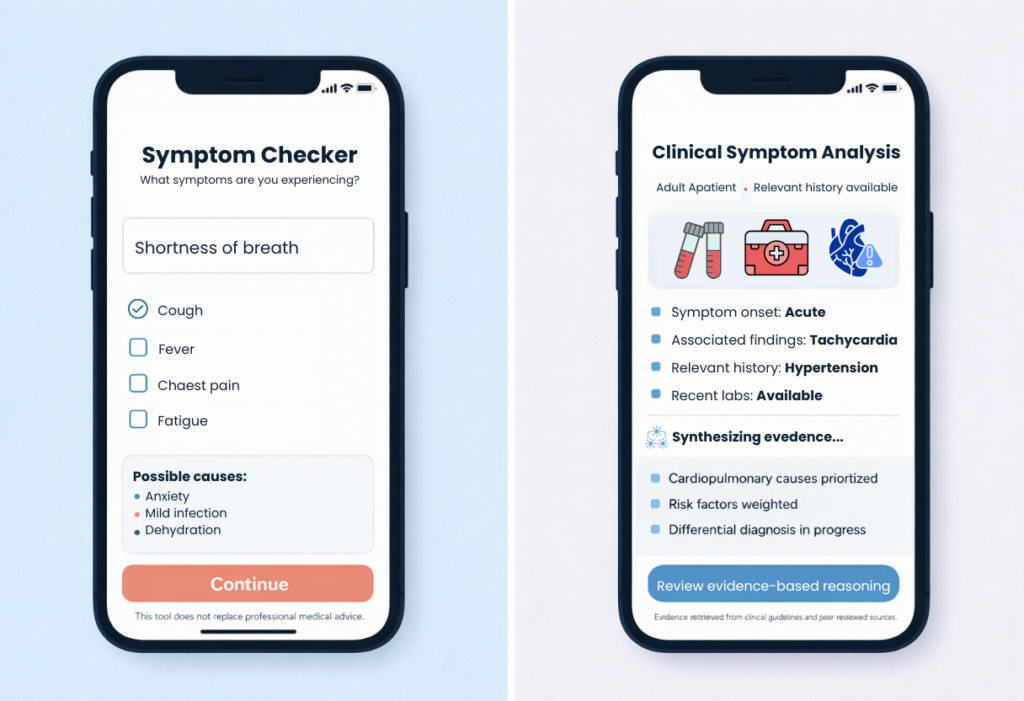
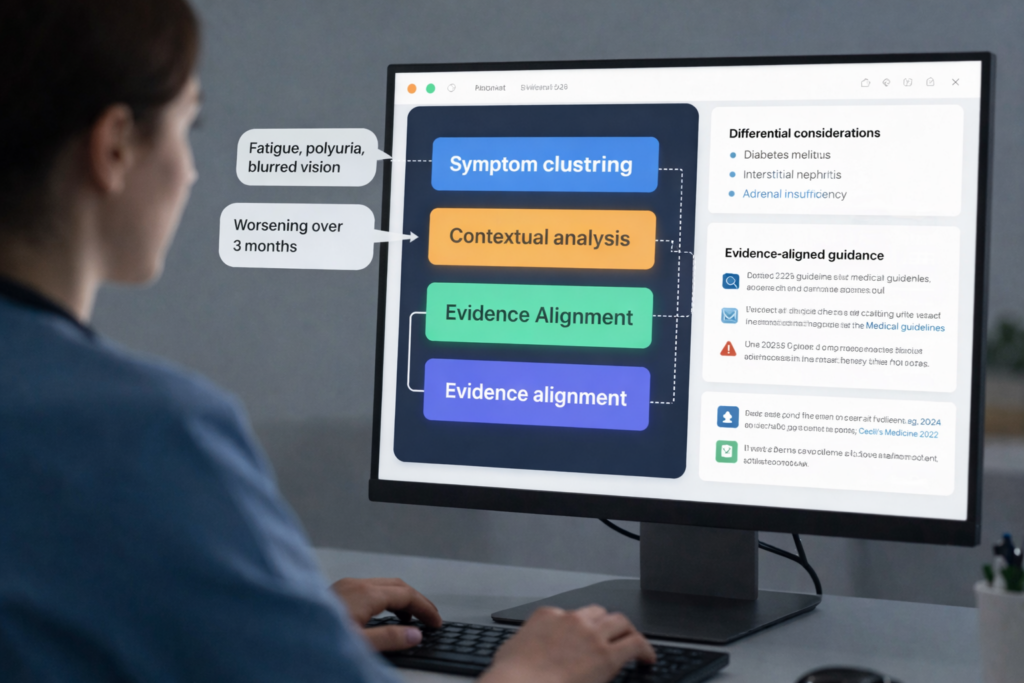
The value of an AI symptom checker for clinicians lies not in predicting diagnoses, but in structuring reasoning.
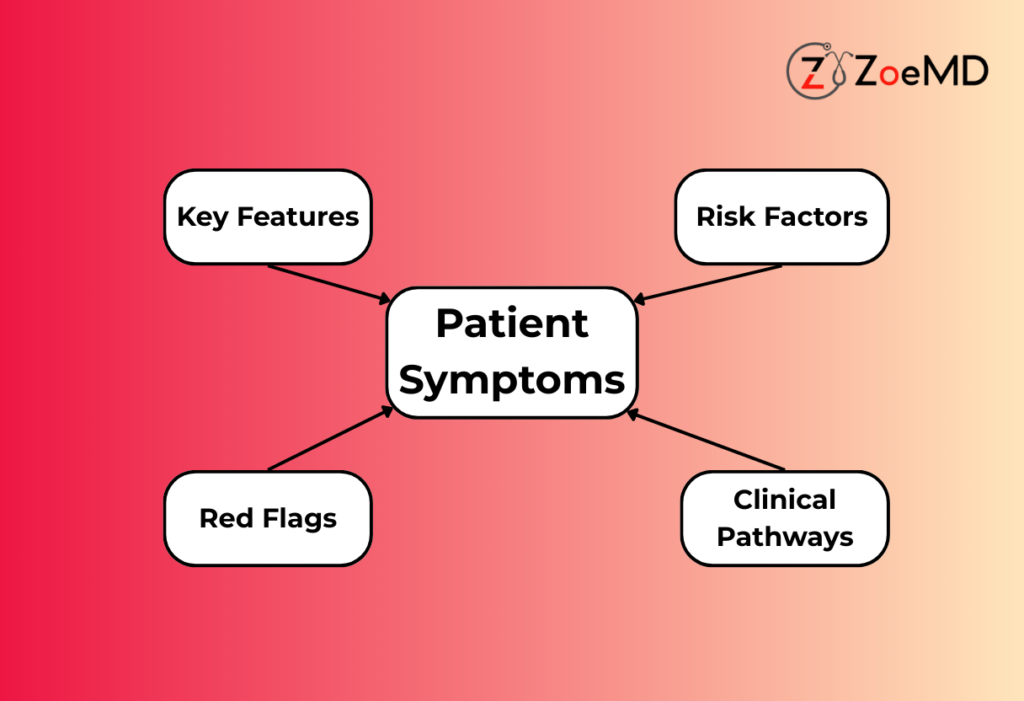
When a physician describes symptoms—such as fatigue, weight loss, or shortness of breath—the AI assistant does not jump to conclusions. Instead, it helps the clinician think through:
- Possible etiologies
- Relevant risk factors
- Guideline-recommended evaluations
- Situations requiring urgent escalation
This process mirrors how clinicians are trained to think, but compresses the time needed to recall and validate evidence.
ZoeMD’s conversational design allows clinicians to refine the discussion step by step, ensuring that symptom interpretation remains contextual and clinically grounded rather than algorithmic.
Evidence Matters: Why RAG Is Critical for Symptom Checking
A major risk with generative AI in medicine is hallucination—confident-sounding responses that are not supported by evidence. This is especially dangerous when discussing symptoms that may indicate serious disease.
That’s why the most reliable AI symptom checker for clinicians relies on Retrieval-Augmented Generation (RAG).
In a RAG-based system:
- Relevant evidence is retrieved from vetted medical sources
- Only that retrieved material is used to generate responses
- Sources can be referenced and verified
This architecture dramatically reduces hallucinations and ensures that symptom-related reasoning remains anchored in real medical knowledge. ZoeMD explains this reliability model in its overview of evidence retrieval AI, where retrieval is treated as a safety mechanism rather than a performance feature.
Supporting Clinical Judgment, Not Replacing It
A common concern around AI symptom checkers is the fear of automation replacing clinical expertise. In reality, clinician-grade systems are designed to do the opposite.
An AI symptom checker for clinicians:
- Does not make final diagnoses
- Does not override physician judgment
- Does not remove clinical responsibility
Instead, it supports decision-making by reducing cognitive load and improving access to evidence. This distinction is central to modern clinical decision support, where AI augments—not replaces—human reasoning. ZoeMD explores this balance further in its discussion of AI-driven clinical decision support systems and their role in safe care delivery.

Use Cases Across Clinical Settings
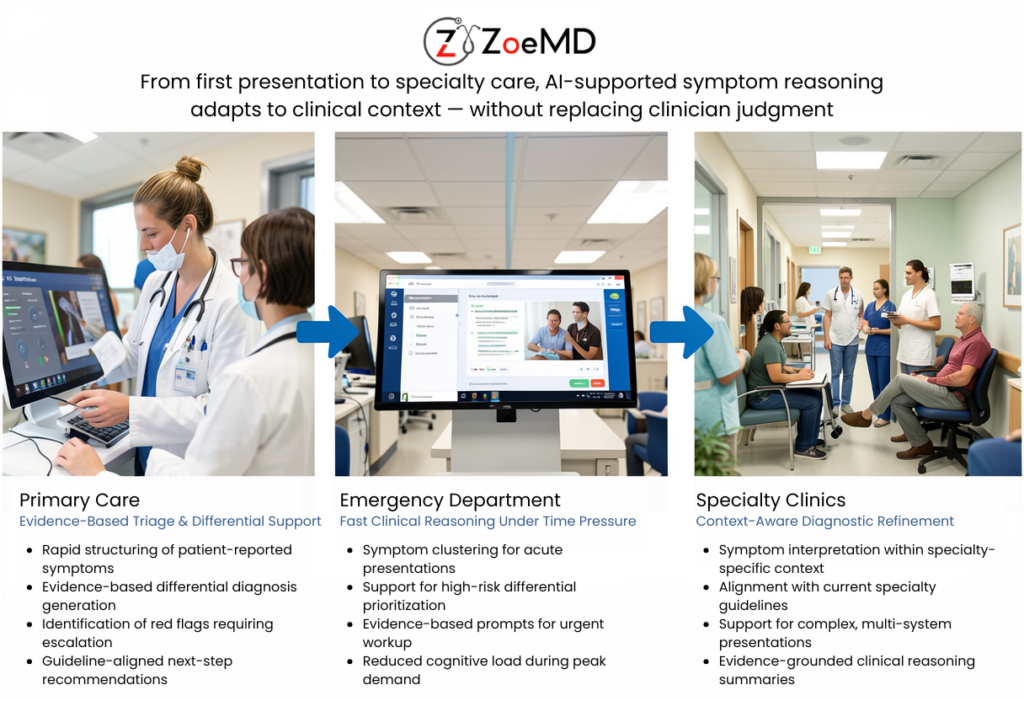
The clinical value of an AI symptom checker extends across specialties and care environments.
In primary care, it can help clinicians quickly assess broad symptom presentations and identify when further testing or referral is warranted.
In emergency and acute care settings, it can assist with rapid recognition of red flags and prioritization of diagnostic pathways.
In specialty care, it supports nuanced symptom interpretation in the context of complex comorbidities and evolving guidelines.
Across all settings, the common benefit is faster, more confident reasoning grounded in evidence, without adding steps to the workflow.
Reducing Cognitive Load and Burnout
Symptom interpretation is cognitively demanding, especially when clinicians must mentally cross-reference guidelines, risk factors, and rare conditions under time pressure.
By surfacing relevant evidence conversationally, an AI symptom checker for clinicians can reduce the mental burden of recall and validation. This contributes directly to improved efficiency and reduced after-hours work—an issue ZoeMD addresses in its analysis of physician burnout and the role of AI in alleviating it.
The goal is not to make clinicians faster at the expense of quality, but to make high-quality reasoning easier to sustain.
How AI Symptom Checking Fits Into the Broader AI Ecosystem
In modern practice, symptom checking does not exist in isolation. It connects naturally to:
- Clinical decision support
- Medical research interpretation
- Workflow and documentation tools
ZoeMD positions conversational symptom analysis as part of a broader ecosystem of AI apps for doctors, where evidence access underpins every advanced capability.
By grounding symptom reasoning in the same evidence layer that supports research and decision support, clinicians gain consistency across their tools and workflows.
Final Thoughts: Symptom Checking as Evidence-Based Dialogue
In 2026, the question is no longer whether AI will assist clinicians—it’s whether that assistance is safe, transparent, and grounded in evidence.
A true AI symptom checker for clinicians is not a diagnostic shortcut. It is a conversational reasoning partner that helps transform symptom input into structured, evidence-based understanding—while leaving final decisions where they belong: with the physician.
If you’re exploring how conversational, evidence-grounded AI can support safer symptom interpretation and clinical reasoning, ZoeMD’s resources on evidence-based medical AI and retrieval-driven systems offer a practical starting point.