Clinicians today are expected to make faster, safer decisions while managing more patients, more data, and more administrative tasks than ever before. That’s why AI apps for doctors are no longer a “future trend” – they are becoming a practical part of everyday clinical work.
From evidence-based decision support to automated documentation, AI tools can reduce cognitive load, cut documentation time, and surface the right information at the right moment. But the AI landscape is crowded, and many physicians are unsure which categories of AI apps are actually useful in real practice.
This guide breaks down five core categories of AI apps for doctors, explains how each fits into clinical workflows, and shows where evidence-based AI fits within that ecosystem.
What Are AI Apps for Doctors?
In this guide, AI apps for doctors means software that uses artificial intelligence or machine learning to:
- Analyze complex medical information faster than a human could reasonably do alone
- Support (not replace) clinical judgment
- Automate repetitive or low‑value tasks, like documentation or inbox triage
- Provide structured outputs that feed into your existing EHR, clinical notes, or patient communications
Crucially, the most clinically useful AI apps for doctors are evidence-based and designed specifically for healthcare workflows – not general-purpose chatbots repurposed for medicine. Well-designed clinical assistants focus on verified sources, medical context, and compliance rather than generic answers.
Below are five realistic, practice-ready categories of AI apps for doctors.
1. Evidence-Based Clinical Decision Support
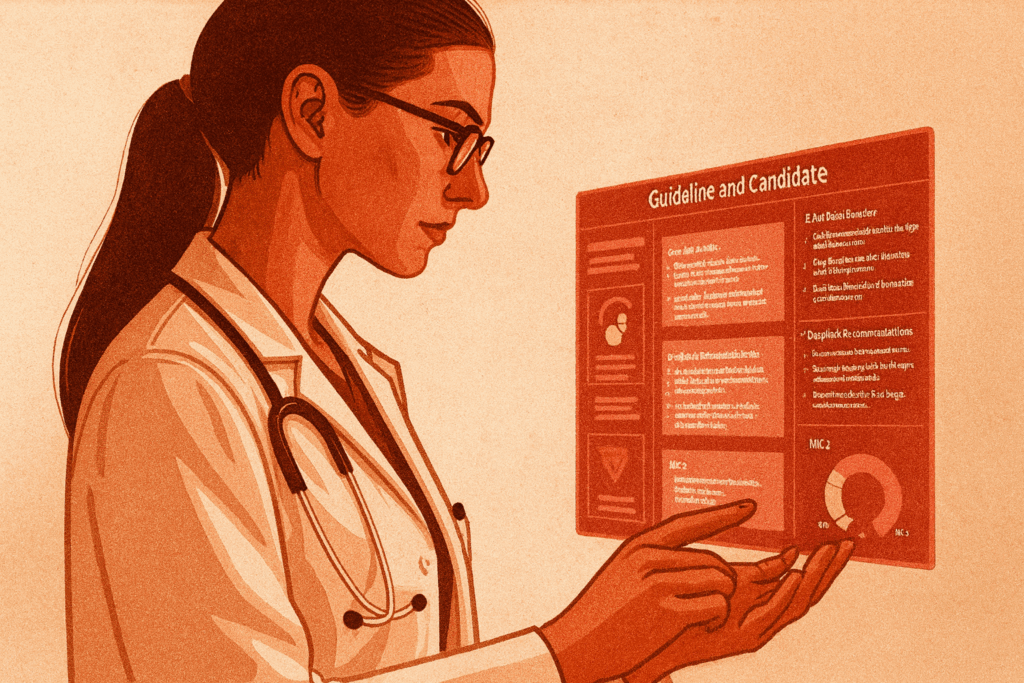
The first and arguably most impactful category of AI apps for doctors is evidence-based clinical decision support (CDS).
These tools help physicians quickly answer questions like:
- “What is the latest guideline-recommended therapy for this condition?”
- “How strong is the evidence for this off‑label use?”
- “Which risk factors or red flags should I reconsider before finalizing this plan?”
Instead of manually searching across multiple databases, AI‑powered CDS can:
- Search large bodies of medical literature, guidelines, and systematic reviews
- Summarize the relevant evidence in clear, clinician‑friendly language
- Highlight key points, such as contraindications, dosage ranges, or outcome data
Many modern AI tools belong in this category. A well-designed AI medical decision support assistant allows physicians to ask clinical questions in natural language and receive concise, cited, evidence‑based answers.
If you are interested in how this type of AI app supports decision‑making, you can start with the Evidence-Based Medical AI for Physicians overview and the Clinical Decision Support Systems: Benefits and Implementation blog post, which walk through benefits, limitations, and implementation considerations for evidence‑based clinical decision support.
2. AI Risk Stratification and Predictive Analytics
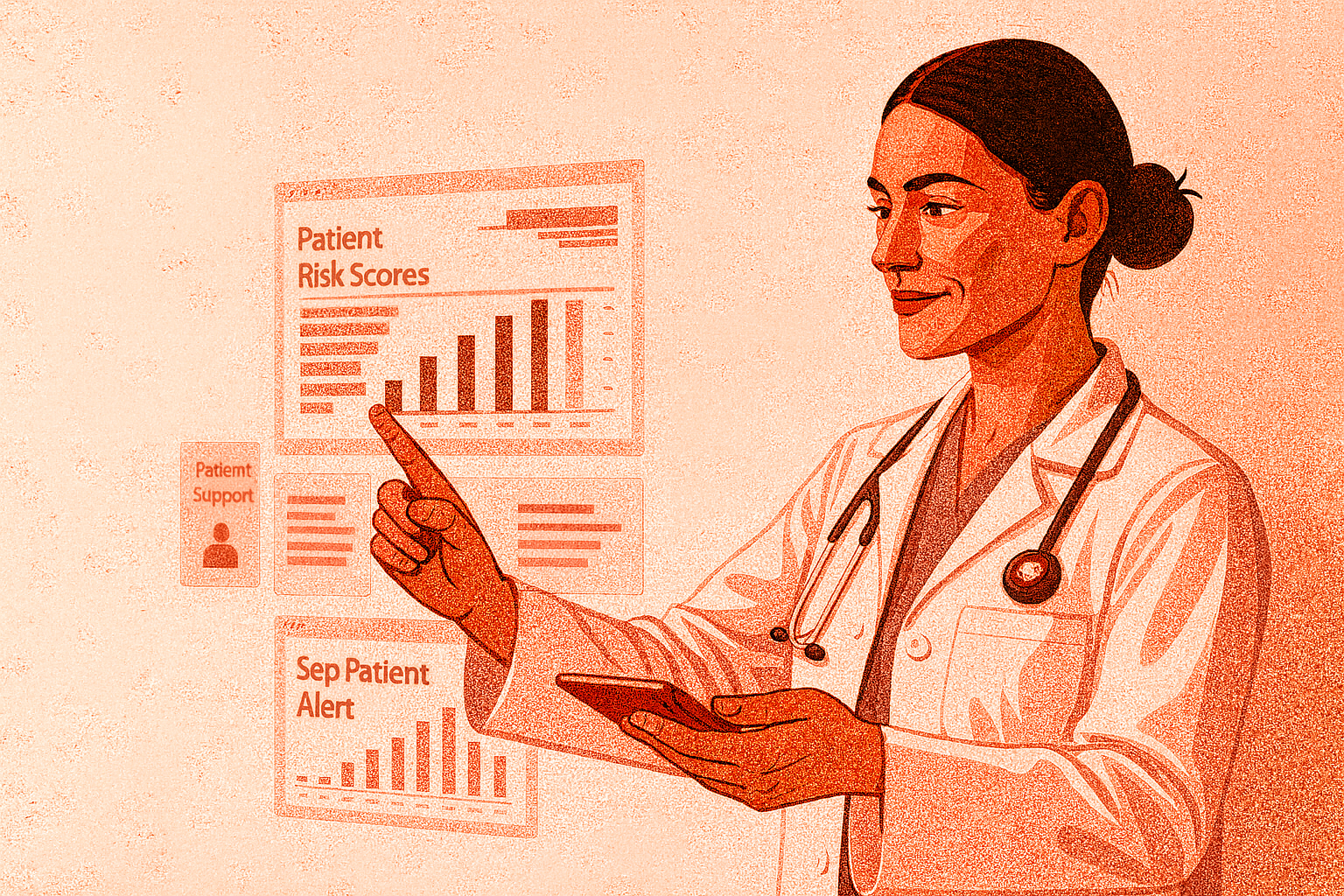
Another major category of AI apps for doctors focuses on predicting risk and outcomes. These tools apply machine learning models to structured and unstructured data (labs, vitals, imaging reports, demographics, comorbidities) to support questions like:
- “What is this patient’s risk of readmission in the next 30 days?”
- “How likely is this patient to deteriorate overnight on the ward?”
- “Which patients should I prioritize for closer follow‑up?”
Key characteristics of AI risk stratification and predictive analytics apps include:
- Pattern recognition across many variables: AI models can analyze combinations of risk factors that might be too complex to track mentally in a busy clinic.
- Dynamic risk scoring: Risk levels can update as new data comes in (e.g., new labs, new symptoms, changes in vitals).
- Triage and resource allocation support: These tools can help clinics and hospitals decide where to direct limited staff and time.
For physicians, the value lies in earlier recognition of high‑risk patients and more personalized care plans. When using this category of AI apps for doctors, one of the most important questions to ask is: How transparent is the model? Apps that provide insight into which factors drive a given risk score are usually more clinically useful than “black box” predictions.
3. AI Medical Scribe and Documentation Assistants
A third, rapidly growing category of AI apps for doctors is AI medical scribes and documentation assistants. These systems focus on one of the most time‑consuming parts of clinical practice: writing notes.
Typical capabilities include:
- Transcribing patient–physician conversations from audio
- Structuring content into SOAP or specialty‑specific note formats
- Suggesting diagnoses, plans, and billing‑relevant elements based on the conversation
- Exporting text that can be pasted or integrated into the EHR
By reducing documentation time, AI medical scribes aim to:
- Cut the number of hours physicians spend charting after clinic
- Reduce burnout linked to administrative overload
- Standardize documentation quality across a practice
When evaluating AI medical scribe tools, consider:
- Accuracy of transcription (including medical terminology and accents)
- How structured the output is (e.g., clearly separated sections like Subjective, Objective, Assessment, Plan)
- Privacy and security guarantees, especially around access to audio recordings
- How easily the note can be transferred into your existing EHR or documentation system
AI medical scribes are a powerful example of AI apps for doctors that give time back without changing the core of clinical decision‑making.

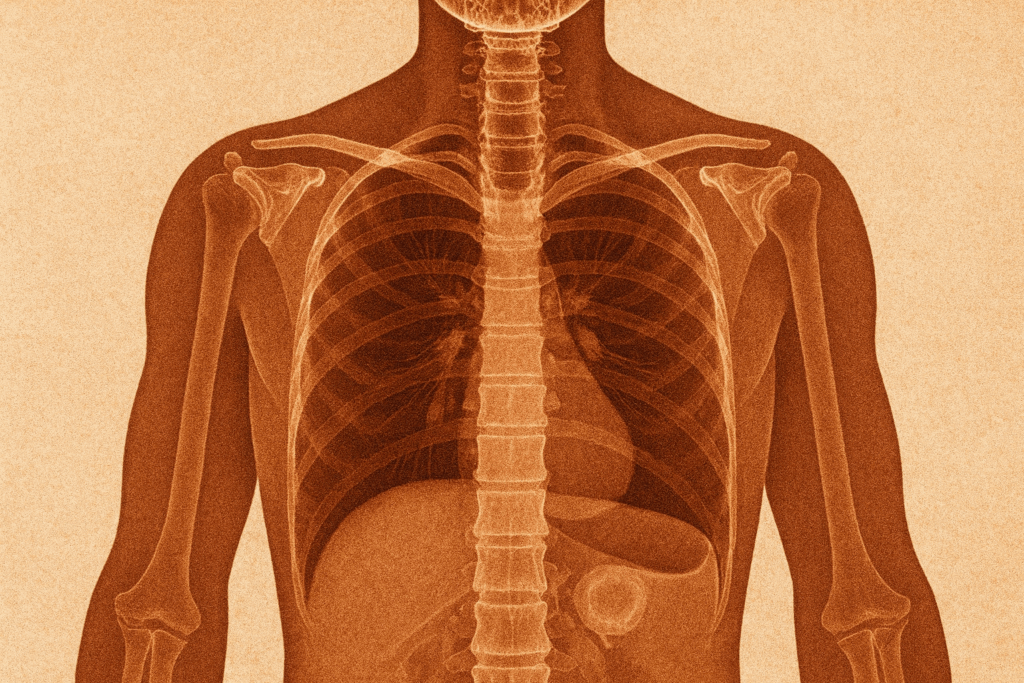
4. AI Diagnostic and Imaging Support
AI‑driven diagnostic support and imaging analysis tools form another important category of AI apps for doctors. Rather than replacing radiologists or specialists, these tools serve as a second set of eyes and a way to surface patterns that may be subtle or easy to miss.
Broadly, AI diagnostic support systems can:
- Analyze imaging data (X‑ray, CT, MRI, ultrasound) for patterns consistent with specific pathologies
- Flag incidental findings that may warrant additional follow‑up
- Suggest differential diagnoses based on combinations of signs, symptoms, and test results
The main benefits for physicians include:
- Improved sensitivity for certain findings, especially in high‑volume environments
- Faster preliminary reads, allowing clinicians to triage or prioritize cases
- Standardization of how common pathologies are described and reported
However, diagnostic AI tools must be implemented carefully. Clinicians should:
- Treat AI output as supporting information, not a final diagnosis
- Understand the training data and limitations of each model
- Monitor local performance – how often the tool adds value versus noise
AI diagnostic support is often most effective when combined with evidence‑based clinical decision support, where an evidence‑focused assistant can help physicians interpret imaging findings in the context of current guidelines and trials.
5. AI Workflow, Inbox, and Communication Assistants
The fifth realistic and increasingly common category of AI apps for doctors is focused on workflow and communication rather than direct diagnosis or research.
These AI tools help by:
- Summarizing long chart histories before a visit
- Drafting patient communications, such as follow‑up messages, instructions, or summaries
- Sorting and prioritizing inbox messages, test results, or consult notes
- Highlighting action items that require physician attention
For many clinicians, these systems can have a surprisingly large impact because they target the invisible work surrounding every patient encounter. Instead of combing through multiple notes or labs, doctors are presented with:
- A concise summary of key events and results
- A clear list of follow‑ups or decisions needed
- Pre‑drafted messages that can be quickly reviewed and edited
The result is fewer missed details, more consistent communication, and better use of limited time. Among all AI apps for doctors, workflow assistants can be some of the easiest to adopt because they usually work on top of your existing systems without requiring a full redesign of your clinical process.
Integrating AI Apps into Your Daily Clinical Practice
Successfully adopting AI apps for doctors is less about buying software and more about integrating it into your routine. A practical approach for individual clinicians looks like this:
- Start with one clear use case
Identify a single pain point – for example, “I spend too long searching for guidelines” or “My notes take too long to write.” Choose an AI app category (evidence‑based CDS, AI medical scribe, etc.) that directly addresses that problem. - Pilot with a defined time frame
Use the tool consistently for a few weeks and track what actually changes: minutes saved per day, reduced after‑hours charting, or more confidence in specific clinical decisions. - Adjust how you interact with the AI
Learn how to phrase questions or prompts to get better output. For decision support tools, that might mean asking more specific clinical questions and reviewing the citations provided. - Set boundaries and safeguards
Decide in advance which decisions will never be delegated to AI (for example, final diagnosis or consent discussions) and ensure everyone in the practice understands AI’s role as a support tool, not a replacement for clinical judgment. - Expand to additional categories if helpful
Once one category of AI apps for doctors is working well (e.g., evidence‑based decision support), you can explore others such as AI medical scribes or workflow assistants, using the same evaluation framework.
For more structured guidance on integrating clinical decision support specifically, the article Clinical Decision Support Systems: Benefits and Implementation offers a practical, step‑by‑step roadmap.
The Future of AI Apps for Doctors: Augmentation, Not Replacement
Across all five categories – evidence‑based clinical decision support, risk prediction, AI medical scribes, diagnostic support, and workflow assistants – one theme is consistent: AI apps for doctors are designed to augment clinical expertise, not replace it.
The most effective tools:
- Give physicians faster access to high‑quality information
- Remove low‑value work so doctors can focus on patient care
- Improve consistency and safety without taking away clinical autonomy
As regulatory frameworks, medical AI research, and real‑world validation continue to evolve, physicians who understand these categories will be better positioned to:
- Select safe, effective AI tools
- Avoid hype and focus on evidence
- Shape how AI is used in their practice or institution
Getting Started with Evidence-Based AI in Your Practice
Evidence‑based AI is most powerful when it is thoughtfully integrated into existing clinical workflows rather than treated as a standalone experiment. Starting with a single, clearly defined use case – such as decision support at the point of care or reducing documentation time – allows physicians to evaluate whether a given tool genuinely improves safety, efficiency, or both.
From there, clinicians can expand into other categories of AI apps for doctors, using the same evaluation framework described above: clinical relevance, evidence quality, data privacy, usability, and cost‑effectiveness. Over time, this structured approach helps distinguish truly valuable tools from short‑lived experiments.
If you would like to explore how an evidence‑based platform can support your daily work with AI apps for doctors, you can start with the resources available on the AI apps for doctors home page.
Conclusion
AI apps for doctors are no longer experimental tools — they’re becoming foundational to modern clinical practice. Understanding the five core categories helps physicians cut through the noise and identify which technologies meaningfully support decision‑making, documentation, diagnostics, and workflow efficiency.
Evidence‑based AI platforms — such as ZoeMD — bring all these strengths together by grounding AI outputs in verified research, clinical context, and transparent reasoning.
Ready to Explore Evidence-Based AI?
To learn how ZoeMD can support your daily workflow, explore these resources:
- Evidence-Based Medical AI Overview
- Pricing for Individuals & Clinical Teams
- Contact ZoeMD for a Demo
These tools help clinicians work smarter, reduce administrative burdens, and deliver safer care — without replacing clinical judgment.